


Victoria Manko acted as the moderator of the event. Victoria Manko thanked the St. Petersburg International Legal Forum for the ability to host the event on the Legal Talks online platform and presented the ICLRC research “Appointment of Insolvency Officers in Russia and Foreign Jurisdictions”.
Victoria briefly outlined the procedures of insolvency officers appointment in six jurisdictions: in France, Austria, Germany, the USA, China, and the Russian Federation. “By looking into the foreign approach we are able to learn more about different procedures of appointing insolvency officers, but the main question remains: how can this foreign approach be applied in Russia,” Victoria remarked.
Mikhail Rukavishnikov described the main principles of the Russian model for appointing insolvency officers. “Russia is just about the only country to be the sanctuary of majoritary creditors, where the insolvency officer acts in the interests of the majoritarian,” he pointed out. Mikhail then spoke about the draft Bankruptcy Law and expressed his view on how the idea behind it corresponds to the researched models.
Sergey Kabanov’s presentation was entitled “Evaluation of the Insolvency Officer’s Interest by Court Provided the Officer and Creditors Have Mutual Representatives”. Sergey described practical difficulties in evaluating insolvency officers’ impartiality: “I believe that as soon as we adhere to the position of denying the existence of the first creditor’s interest to appointing an insolvency officer, any of the suggested models will be relevant.”
Oleg Zaitsev concluded the discussion with the report “Foreign Approach to Insolvency Officers Appointment: Useful Practice or Inapplicable Theory?” in which he expressed his opinion on using foreign expertise in implementing the bankruptcy reform. “In the end, it turns out that direct borrowing of the foreign practice is too difficult for us. It seems to me that the most beneficial way for us is to use the model proposed in the draft law” Oleg concluded.
Q&A session, in which the questions from the online audience were discussed, concluded the event.
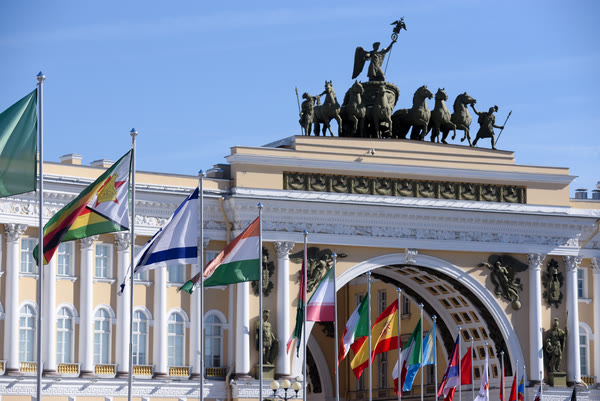
Image: Евгений Егоров/Фотохост-агентство ТАСС/ПМЮФ